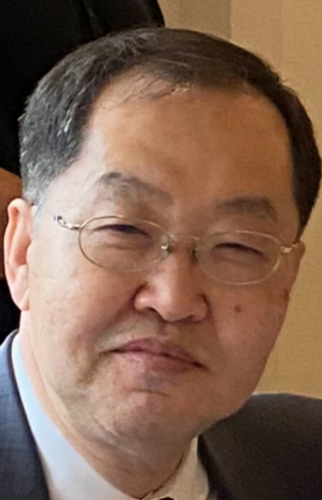
Hello, Chairman Son Jong-man. I’m Park Byung-chan, publisher and CEO of the New York Economic Times. I know you’re busy, so thank you for making time to speak with us today.
Q Please briefly introduce the New Jersey Korean Nail Association, a professional organization representing the Korean American community in New Jersey.
Founded in 1992, the New Jersey Nail Association is the state’s first and largest organization of its kind, with more than 30 years of history. As an organization representing a minority community, it helped lay the foundation for New Jersey’s nail salon regulations. More recently, it helped pass legislation allowing undocumented immigrants to qualify for cosmetology licenses and recognizing online classes. A bill allowing cosmetology exams in Korean is now before the state Senate. Through seminars and other efforts, the association works to advance the nail industry and represents more than 1,200 Korean-owned nail salons in New Jersey.
Q We’re already eight months into 2024, the Year of the Blue Dragon. Your term as chairman has coincided with difficult external conditions, including COVID-19 and major market shifts. The association is said to have helped nail salon owners weather these challenges. Please briefly tell our readers about the difficulties you’ve faced and the association’s plans going forward.
The nail industry has yet to fully recover from COVID and is now facing an economic slowdown. It is also struggling with a chronic shortage of skilled workers. Korean-owned nail businesses remain small in scale, and difficulties adopting new technologies and products, along with reckless competition, are holding the industry back. To address these challenges, the association is working to advance the Korean American nail industry through group purchases of new products and seminars on new techniques, cosmetology regulations, labor laws, and commission-based pay.
Q Please tell us about any government regulations affecting the industry, including labor laws, sanitation, and environmental issues, and explain how the association and its members are responding.
Labor law is a basic set of rules that applies equally to everyone, including citizens and undocumented immigrants. Many Korean salon owners prefer paying workers by the day, and many businesses do not follow basic labor laws. Disputes involving workers from other ethnic communities are also common. Nail services are considered quasi-medical work and require professional licensing. Until now, only permanent residents and others with legal status could obtain licenses, but the New Jersey Nail Association helped change the law to allow undocumented immigrants to qualify. Many have since obtained licenses, helping resolve these issues. However, many salons still receive citations from the state cosmetology board over licensing.
Q Compared with other ethnic groups, relatively few second-generation Korean Americans work in the nail industry, leading to an aging workforce and making innovation difficult. Why is that, and how can the industry respond?
U.S. nail industry revenue peaked at $8.57 billion in 2021, following the impact of COVID, and has since fallen to $7.25 billion. The industry is also experiencing a modest slowdown due to a lack of new technologies and products. Some unregulated businesses run by members of minority groups have also created challenges, but I believe the industry will recover. Nail businesses have long focused on being large, glamorous, and affordable. But the industry needs to evolve by combining beauty services with care and wellness, moving toward a more health-oriented model.
We need to stop running businesses with a narrow, insular outlook and start thinking more broadly. To attract more second-generation Korean Americans, we’re working to show them that the nail industry is not simply a form of manual labor, but a business that can generate significant value. I believe these changes can overcome the aging-workforce problem, and we’re already seeing gradual progress.
Q What kinds of innovation do you expect in the nail industry? Are there any innovative startups in the sector, Korean or foreign, whose companies or technologies could transform the industry?
A new trend is emerging that goes beyond beauty to include care and wellness, and a new type of beauty service called the “salon suite” is gaining traction.
Q What hurdles must the nail industry overcome to achieve sustainable growth? What specific steps can address them?
The most important part of the nail industry is its licensed professionals. We are working with the state government to make it easier to obtain a nail license and studying a program that would allow foreign nail licenses to be converted into New Jersey licenses. In particular, we are working toward mutual recognition of Korean nail licenses.
You have been very active since being reappointed as chairman of the New Jersey Korean Nail Association. Please tell the community about the major events you’ve held, such as the fall nail show, and your key plans for 2024.
We are moving forward with initiatives that we have planned and prepared for a long time: licensing for undocumented immigrants, recognition of online classes, exams in Korean (more precisely, in the four languages most widely used in New Jersey), and recognition of foreign nail licenses. We are also working to help Korean nail professionals enter the U.S. through J, M, and B-2 visas. In addition, we are actively upgrading Korean-owned nail salons in New Jersey. We maintain ongoing relationships with state officials to advance this work and are in contact with Korean nail industry representatives.
Q In light of the U.S. economy, how would you describe the current state of the Korean American nail industry? What would you like to say about revitalizing the industry and advancing the Korean American economy?
One problem in the Korean American nail industry is a tendency to cling to old ways rather than move forward. People say that these days, even twins have a generation gap. I encourage you to look farther and think bigger. Blend Korean influences with American ones, showcase what makes us distinctive, and adopt a community-minded approach that welcomes sharing. That’s the road to success.
Q Please briefly share some of the successes and challenges you’ve experienced since immigrating to the United States.
I’ve now spent more than three times as long living in the United States as I did in Korea. There were many difficult times, but I believe a positive outlook brought me to where I am today. If we put “us” ahead of “me” and work together, what problem can we not solve?
Thank you for taking the time to speak with us today. We wish the New Jersey Korean Nail Association continued success. Finally, please share a few words with the Korean community in New Jersey and readers of the New York Economic Times.
I believe we can succeed in the United States if we move beyond a narrow Korean identity and take pride in being Korean American. If we step outside our small circles and join the broader currents of American life, we can achieve even greater dreams as Korean Americans. I hope you achieve your dreams.
Questions about this story?
AI answers only from this article and related ones.
Answered from ten years of our reporting. Check legal and tax questions with a professional.