Gochujang recipes for pasta and cookies are spreading, signaling that Korean fermented pastes and sauces, collectively known as K jang (hereafter, K jang), are becoming part of everyday life for U.S. consumers. Based on examples trending on North American social media and a survey of U.S. consumers, University Tomorrow 20s Research Institute analyzed the rise of K jang in North America. The key findings are available free in “Trend Report: Global Sensing (August 2026).”
One in Four U.S. Consumers Prefer Condiments and Sauces, Including Fermented Pastes
U.S. consumers’ perceptions point to broad interest in Korean food. University Tomorrow 20s Research Institute surveyed U.S. citizens ages 20–39 living in the United States from July 2 to 6.* Asked which aspects of Korean lifestyle interested them (multiple answers allowed), respondents ranked street food first (40.6%) and Korean dining out second (39.4%). Korean home-cooked dishes such as doenjang jjigae and kimchi ranked fourth at 34.8%. This suggests interest is expanding beyond Korean food encountered while traveling or dining out to meals people can prepare at home.
* 480 respondents who were interested in Korea and had consumed Korean products or content in the past six months
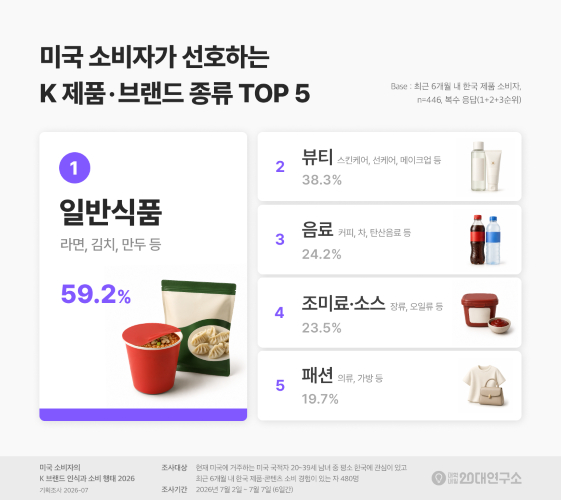
In addition, 23.5% of respondents who had purchased Korean products in the past six months selected “condiments, sauces, and powders”—including fermented pastes and oils—as a preferred type of Korean product or brand (multiple answers allowed). That is about one in four.
The category ranked fourth, behind general food products (59.2%), beauty (38.3%), and beverages (24.2%), and ahead of fashion, which ranked fifth (19.7%). Alongside ramen and kimchi dumplings, widely recognized K-food favorites among U.S. consumers, fermented pastes and oils appear to be establishing themselves as preferred product categories in their own right.
Gochujang, the next “Swicy” star after Buldak, gains a healthy image
University Tomorrow 20s Research Institute identified two trends behind the growing attention to K jang. The first is “Swicy,” the pairing of sweet and spicy flavors. North American consumers increasingly favor complex flavors over sweetness alone. While the Buldak Challenge once competed on heat alone, gochujang is now seen as combining spice with subtle sweetness and the savory umami characteristic of fermented foods.
Google searches for “Swicy” in the United States rose about 850% from January to July 2026 compared with the same period a year earlier. Food industry experts have also named gochujang as an ingredient that could take “Swicy” to the next level.
The second trend is the perception of Korean food as healthy. As interest in healthy eating grows worldwide, Korean cuisine is benefiting from its healthy image. In a May survey of U.S. residents ages 20–29,* 15.0% cited a “healthy image,” associated with fermented foods and vegetables, as a key consideration when choosing Korean food, following “appealing flavors” such as spice and umami (25.0%). That figure was slightly higher than the share who cited price (12.5%). Against this backdrop, K jang is being rediscovered as a healthy sauce. The spread of recipes pairing fresh vegetables with ssamjang or using gochujang and soy sauce in salads appears to reflect this perception.
* 200 men and women who had encountered K-food-related content in the past month
Beyond Challenges and Into Everyday Meals: K-Food on the “Savory Plate”
K-food is also finding its way into everyday meals. “Savory Plate,” a recent TikTok trend featuring salty, umami-rich ingredients arranged on a plate, has included Korean foods such as gim, dumplings, and seasoned fried chicken. Eggs seasoned with soy sauce and vegetables drizzled with sesame oil have also been presented as a “healthy breakfast.”
Search data points to a similar trend. According to an analysis by ListeningMind, a search data analytics platform from Ascent AI, Google searches mentioning Korea in connection with “Savory Plate” rose about 170% over the past year. While the overall volume remains small, the trend is clear: consumers are moving beyond learning what Korean food is to looking up specific dishes and ways to use ingredients so they can make them at home.
Through three avenues—its sweet-and-spicy flavor, its healthy image as a fermented sauce, and its growing role as an everyday ingredient—K jang is finding new opportunities in North America. University Tomorrow 20s Research Institute also covers global food and beverage trends emerging on social media in “Trend Report: Global Sensing (August 2026).”
Questions about this story?
AI answers only from this article and related ones.
Answered from ten years of our reporting. Check legal and tax questions with a professional.