Digital healthcare leader Huneed announced on the 21st that it had successfully raised KRW 20 billion in Series B funding.
The round was led by existing investor Smilegate Investment and new investor Korea Development Bank. IBK Industrial Bank of Korea, A Ventures, and Inside Equity Partners also joined as new investors. Yuhan Corporation, Shinhan Capital, Synergy IB Investment, and FuturePlay participated in the follow-on investment.
With this funding, Huneed has secured another major investment just 10 months after raising KRW 5 billion from strategic investor Yuhan Corporation in February and closing its Series A round at KRW 13.2 billion. The company has raised a total of KRW 35.8 billion to date.
A notable feature of the round is the significant participation by financial institutions, including Korea Development Bank, IBK Industrial Bank of Korea, and Shinhan Capital. Yuhan Corporation, a strategic investor that became Huneed’s second-largest shareholder in the Series A round, also made a substantial investment in Series B and remains the company’s second-largest shareholder.
Huneed secured this investment through the “Mega-7 Club,” established by Korea Development Bank to foster unicorn companies. The company aims to demonstrate that domestic investment at scale through the Mega-7 Club can help it grow into a unicorn.
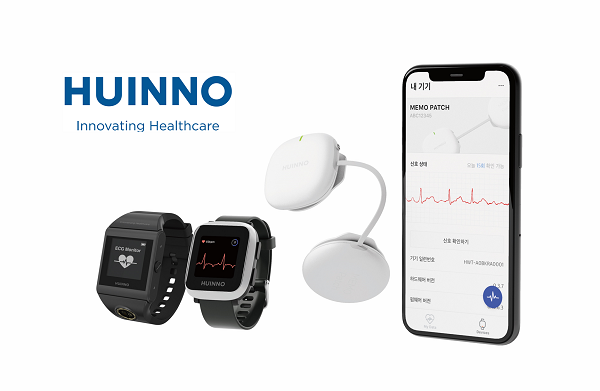
Huneed is a leading digital healthcare company developing AI-powered wearable medical solutions. Its products include MEMO Watch, a watch-style electrocardiogram (ECG) monitor; MEMO Patch, a patch-style ECG monitor; and MEMO A.I., AI-powered ECG analysis software. The company plans to enter the market through a domestic distribution agreement with Yuhan Corporation.
Huneed’s service provides remote monitoring using its proprietary AI-powered medical devices. Remote medical care, currently the subject of considerable debate, includes prescriptions and diagnoses. By contrast, Huneed’s remote monitoring service is a lawful non-medical service: patients measure their own vital signs remotely, and hospitals or doctors monitor the data. In an emergency, patients are advised to visit a hospital or transfer to a primary care facility by phone, text message, KakaoTalk, or other online platforms.
Remote monitoring has not yet been commercialized in Korea. It is a service with significant potential, in line with the expected growth of the broader telehealth market.
Baek In-soo, a director at Smilegate Investment, which led the Series B round, said, "Huneed is leading Korea’s challenging digital healthcare market with its hardware and software expertise. Among companies that interpret ECGs using AI, Huneed has already demonstrated its global competitiveness. ECG data collected over more than 14 days cannot be analyzed accurately using currently available methods. Huneed’s AI technology is a key driver in advancing this currently imperfect market. Ultimately, the technology will maximize the convenience and productivity of medical professionals, and the resulting improvement in healthcare quality will benefit patients. This new user experience will serve as a foundation for Huneed to grow into a leading Korean digital healthcare company."
Huneed CEO Gil Young-jun said, “Rather than rushing to bring our remote monitoring service—which is expected to be the first of its kind to be commercialized in Korea—to market, we will listen to a wide range of voices from the medical community and quickly address any areas for improvement as we prepare to enter the market. We will also continue to verify the efficacy and safety of our devices through a variety of clinical trials, rather than relying on one-off studies. By building confidence in the services we aim to provide, we will establish a foothold in Korea and demonstrate that Korean medical device companies can succeed globally.”
Questions about this story?
AI answers only from this article and related ones.
Answered from ten years of our reporting. Check legal and tax questions with a professional.