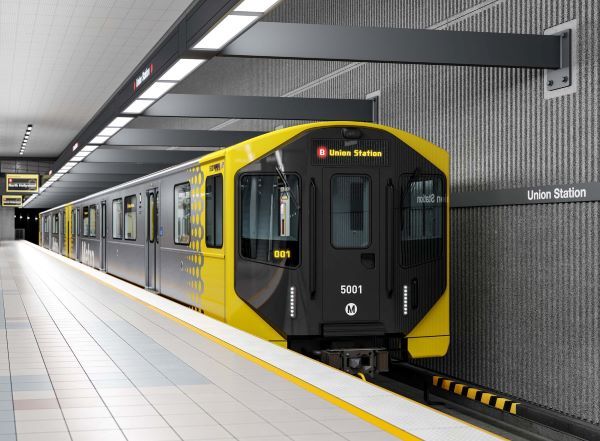
Hyundai Rotem said on the 6th that its U.S. subsidiary had been selected as the preferred bidder for a contract to supply metro trains to the Los Angeles County Metropolitan Transportation Authority (LACMTA). The contract is worth approximately KRW 868.8 billion (US$663.69 million).
The project will replace aging trains that have been in service since 1993 and meet the expected surge in travel demand during the 2028 Los Angeles Olympic and Paralympic Games. In selecting a manufacturer, LACMTA placed significant weight on non-price factors—including contract performance, track record, quality and technology—to guard against problems such as poor-quality deliveries and missed deadlines.
Hyundai Rotem won the contract over its competitors after demonstrating its train-building expertise, track record and ability to meet delivery schedules. The company earned recognition for advancing service schedules by delivering trains early for Vancouver’s automated metro system in Canada, securing contracts for the project in 2005 and 2018.
Active support from Korean rail organizations also played a decisive role in Hyundai Rotem’s win. LACMTA visited the Osong Railway Comprehensive Test Track, built by the Korea National Railway and operated by the Korea Railroad Research Institute, to assess the country’s advanced rail infrastructure and ability to verify train performance. The trains for LACMTA will also undergo quality testing on the track.
The trains for Los Angeles will consist of two-car sets, with up to six cars able to operate together. Each car can carry up to 245 passengers. With a top operating speed of 113 km/h, the trains will run on the B (Red) Line between downtown Los Angeles and North Hollywood (26.4 km) and the D (Purple) Line between downtown Los Angeles and Koreatown (10.3 km).
Hyundai Rotem said it would draw on its experience and capabilities from numerous projects in the United States to deliver trains that satisfy both local residents and visitors.
Hyundai Rotem has previously won U.S. contracts for California double-decker railcars in 2006, as well as double-decker railcars for Florida and metro trains for Philadelphia. It has continued to work on a range of U.S. projects, winning contracts for Boston double-decker railcars in 2008 and Denver metro trains in 2010, followed by an additional Boston double-decker railcar contract in 2019.
Questions about this story?
AI answers only from this article and related ones.
Answered from ten years of our reporting. Check legal and tax questions with a professional.