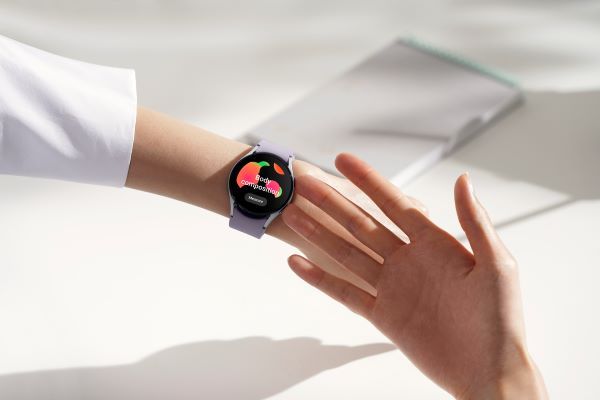
Using the body composition measurement feature on the Galaxy Watch5
Samsung Electronics’ Galaxy Watch5 joined SpaceX’s Polaris Dawn space mission, which launched on the 10th and returned safely on the 15th (local time).
The Galaxy Watch5 was used in a study to monitor astronauts’ body composition in microgravity, one of the research areas pursued during their time in space.
The astronaut health research conducted on Polaris Dawn was carried out in collaboration between the Transitional Research Institute for Space in Health (TRISH) at Baylor College of Medicine, a U.S. research partner of NASA on health-related studies, and spacecraft manufacturer SpaceX.
The study monitoring astronauts’ body composition with Galaxy Watch was led by the University of Hawaii Cancer Center, which is collaborating with Samsung Electronics on research.
This study using the Galaxy Watch5 was designed to monitor astronauts’ physiological responses and health in an environment vastly different from Earth, and in particular to identify ways to prevent risks related to muscle loss. For the study, astronauts wore Galaxy Watch5 devices equipped with advanced BioActive Sensors.
Conventional body composition monitoring equipment is bulky and heavy, making it difficult to use and transport into space, which has hindered health research. Galaxy Watch, however, supports accurate, wide-ranging body composition monitoring and is easy to wear, helping facilitate health research in space.
In particular, Galaxy Watch’s body composition monitoring feature analyzes a range of data, including skeletal muscle mass, basal metabolic rate, body water, and body fat percentage, helping users accurately understand their physical condition.
The Galaxy Watch5 devices carried aboard the Polaris Dawn mission successfully completed more than a year of preflight testing. NASA is known to subject all equipment carried aboard spacecraft to rigorous, long-term testing for safety reasons.
Meanwhile, the health features of Galaxy Watch have been validated through a range of research findings.
The Pennington Biomedical Research Center at Louisiana State University and the University of Hawaii Cancer Center have reported that body composition measurements taken with Galaxy Watch showed a high correlation of 93% to 97% with results from clinical dual-energy X-ray absorptiometry (DXA) and bioelectrical impedance analysis (BIA) devices.
In a recent collaborative study with the University of Michigan’s Human Performance & Sport Science Center (HPSSC), researchers also found that body fat percentage data measured by Galaxy Watch had a 95% correlation with measurements from DEXA, a standard body composition analysis device.
Questions about this story?
AI answers only from this article and related ones.
Answered from ten years of our reporting. Check legal and tax questions with a professional.