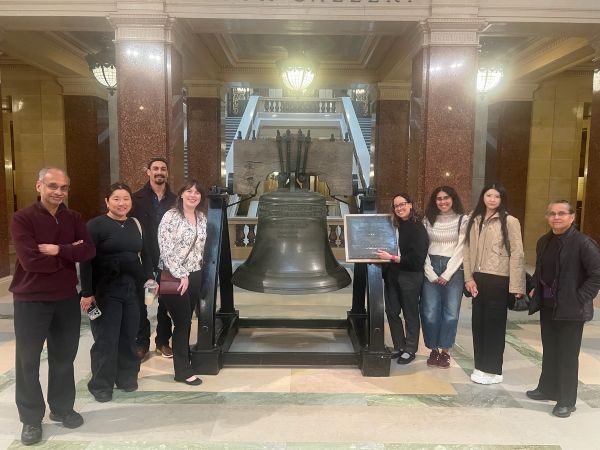
Data-driven decision-making platform company Duguda said it has been selected for the gBETA Madison accelerator program, jointly operated by the Wisconsin Economic Development Corporation (WEDC) and global venture firm gener8tor.
WEDC is a state agency overseeing economic development in Wisconsin. It supports the startup ecosystem in partnership with more than 600 local organizations. WEDC runs the gBETA program as part of its “Accelerate Wisconsin” initiative, attracting high-potential startups from the United States and abroad to Wisconsin and helping them enter the U.S. market and establish local operations.
South Korea has numerous programs supporting U.S. expansion, including those run by KOTRA and the Ministry of SMEs and Startups. However, it is rare for a Korean company to be selected directly by a U.S. accelerator on its own merits, without support from the Korean government. Duguda’s selection is significant because it received direct recognition from a U.S. accelerator for its technology and market fit without going through a Korean government support program.
gBETA is a no-equity startup accelerator operated by gener8tor in 45 communities across 25 U.S. states. Since launching in 2015, its graduates have raised more than $1 billion in follow-on funding and created more than 7,055 jobs. Five companies, including Duguda, were selected for this year’s gBETA Healthcare Madison program from a large pool of applicants across the United States and abroad.
Duguda is developing Entity Flow, a platform for hospital operations decision-making. U.S. hospitals make dozens of high-stakes operational decisions each month on matters such as staffing, service-line adjustments and budgeting, but most do so without structured analysis or decision records. Using cost-effectiveness analysis (CEA), Entity Flow helps hospital leaders make data-informed decisions and demonstrate to boards and auditors that those decisions were sound. The company is currently in pilot discussions with several U.S. hospitals.
CEO Rina Song holds a Ph.D. in health policy and decision science from Harvard University. She studied in a program founded by Milton Weinstein, a pioneer of cost-effectiveness analysis, and previously served as a principal investigator (PI) for research funded by the U.S. National Institutes of Health and the Agency for Healthcare Research and Quality (NIH/AHRQ). She also holds a master’s degree in statistics from Yale University and a bachelor’s degree in applied mathematics from the California Institute of Technology (Caltech), and previously served as a professor at UCL School of Management in the United Kingdom.
Before entering the U.S. market, Duguda built decision-making frameworks for more than five organizations in South Korea, including the National Assembly and the Gyeonggi Provincial Council. The Rotman School of Management at the University of Toronto in Canada developed a business school case study on Duguda’s U.S. market entry, which is now used in MBA and executive education programs.
“I’m pleased that our work has been recognized in the United States, where we have seen firsthand the challenges hospital leaders face in making decisions and have a framework that can help address them,” said CEO Rina Song. “We plan to use the networks of WEDC and gener8tor to begin our expansion into the U.S. hospital market in Wisconsin.”
The gBETA Madison program runs for seven weeks. Duguda is scheduled to present to investors, community partners and the public at a showcase on April 28 at the University of Wisconsin–Madison.
Questions about this story?
AI answers only from this article and related ones.
Answered from ten years of our reporting. Check legal and tax questions with a professional.